

Finding your perfect bed can feel daunting. After all, we spend about a third of our lives in bed! You may be on the hunt for a new bed for many reasons. Perhaps you’re moving into your first home, upgrading your current bed, or wanting to enhance your interior design with a particular bed style. If you feel at sea, fear not! We’re here to give you all the information you need to make the right decision.
Beds are an investment, so before buying one, consider these things, including what bed base is best for your space, the different bed sizes, and how to choose the best one. You should also consider storage options, durability, mattress compatibility, style, and aesthetics.
Sleeping on an old or broken bed can cause back and joint pain and interfere with sleep quality. So, getting the right bed is crucial for getting a good night’s sleep and improving your quality of life.
To help you find the perfect bed, we’ve compiled the best bed-buying guide, which covers everything you need to know about bed types, bases, headboards, and more.
Table of contents
- What should you look for when buying a bed?: How to choose a bed frame
- What type of headboard is best?
- What type of headboards are in style?
- How often should you replace a bed?
What should you look for when buying a bed?: How to choose a bed frame
The next section will show you how to choose a bed and the key considerations to assess before purchasing. Start with the bed frame type and size, then look into aspects like mattress compatibility, materials and durability, style and aesthetics, comfort, and ergonomics.
How many types of beds are there?
The bed frame is one of the biggest factors in choosing a new bed with many types available, including four-poster, sleigh beds, platform beds, panel beds, divan beds, ottomans and more. We’ll explore some of the most popular styles in this bed frame buying guide.
Four-poster or Canopy beds

One of the most traditional types of bed is the classic four-poster bed, sometimes called a canopy bed, which is named after its distinctive and grand design. These beds feature four tall, vertical posts at each corner, often supporting a canopy. Traditional four-poster beds typically had long fabric draped across the top of the pillars for privacy and warmth, thus creating a canopy ceiling above the bed. However, modern styles tend to go without drapes and curtains.
These beds originated in the late 14th to early 15th century and became particularly popular among European noblemen during the Renaissance. Initially designed for practical purposes, they helped retain heat and offered protection from drafts in large, unheated rooms. Over time, they evolved into symbols of wealth and status, featuring ornate carvings and luxurious fabrics. Today, four-poster and canopy beds remain timeless, blending historical charm with modern aesthetics for traditional and contemporary interiors.
Sleigh beds
Sleigh beds are characterised by curved or scrolled headboards and footboards resembling sleighs. Originating in the early 19th century, the classic design reflects French and American Empire styles characterised by bold, curved, and neoclassical influences. Initially crafted from heavy woods like mahogany or cherry, sleigh beds were luxurious and symbolised sophistication and comfort.
Sleigh beds became popular during the Victorian era. They often featured intricate carvings and upholstery. Today, they are crafted from various materials, including wood and metal. They remain stylish, blending traditional charm with contemporary design to suit traditional or modern interior styles.
Platform beds

A simple platform bed features a flat, sturdy base that supports the mattress without box springs. It can also have a solid base or wooden slats, which usually have a lower profile. Early examples of this bed can be found in Roman and Egyptian cultures, where raised sleeping surfaces offered better hygiene and comfort.
Modern platform beds gained popularity in the mid-20th century, inspired by Scandinavian and Japanese design principles emphasising simplicity and functionality. Typically constructed from wood, metal, or composite materials, they sometimes include storage options beneath the frame. Platform beds are valued today for their contemporary aesthetic, practicality, and ability to complement various interior styles. Popular bed styles include floating platform beds that give the illusion that your bed is floating above the floor.
Panel beds

Panel beds are a classic design with a headboard and footboard constructed from flat, framed wood panels or other materials. They originated in 17th-century Europe as sturdy, decorative furniture pieces. The panels were often embellished with carvings or mouldings, reflecting the craftsmanship and aesthetic preferences of the time.
Unlike a platform bed, panel beds support a box spring base and mattress, offering a higher profile look that blends with various interior styles. Panel beds remain a fantastic choice for those looking for diverse materials and finishes, combining timeless elegance with modern versatility for bedrooms of any decor.
Divan beds
Divan beds are popular for their practicality and versatility. They consist of a sturdy, upholstered base paired with a mattress. Originating in the Middle East, the term “divan” referred to low, cushioned seating along walls. Later, it evolved into a bed design popular in Europe during the 19th century. The base is made of a wooden frame and often features in-built drawers for storage, making it ideal for space-saving solutions.
Divan beds are widely appreciated for their comfort and functionality. You can choose a platform top divan for a base that provides a solid foundation or a sprung divan that offers more comfort and flexibility. They remain a popular choice for modern bedrooms for practical and customisable aesthetics.
Ottoman beds
Ottom.an beds are modern space-saving solutions. Their hinged base lifts to reveal built-in storage beneath the mattress. Inspired by the Ottoman Empire’s multifunctional furniture, these beds became popular in the late 20th century as practical solutions for compact living spaces.
The lifting mechanism, often gas-powered, allows easy access to the storage area, ideal for bedding, clothing or other items. Typically upholstered for a sleek appearance, ottoman beds are available in various materials and designs to suit diverse interiors. They are highly valued for their functionality, comfort and ability to maximise storage space.
Bed sizes

The next crucial consideration you need to make is what bed size to get. You must ensure it’s the right size for you and the room.
Firstly, think about the room size. You need a bed that will suitably fit your room. Consider how the bed looks. You may be able to fit a king-sized bed into the room physically, but if it takes up too much space the rest of your room can look and feel cramped. Plus, you may find relaxing hard without reasonable space around you.
If buying a bed with a partner, you should consider getting the right size so both can sleep peacefully and comfortably. The bigger the bed, the less disturbance there will be.
What are the 5 sizes of beds?
You can opt for several sizes; we’ve listed them below with the accurate sizes so you can measure your space for the perfect-sized bed.
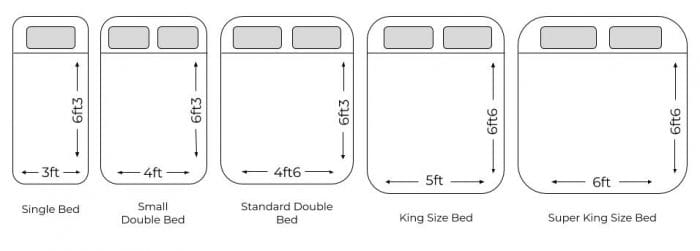
- Single Bed – 3’0” x 6’3” (90 x 190cm)
- Small Double Bed (Queen) – 4’0” x 6’3” (120 x 190xm)
- Double Bed – 4’6” x 6’3” (135 x 190cm)
- King Size Bed – 5’0” x 6’6” (150 x 200cm)
- Super King Size Bed – 6’0” x 6’6” (180 x 200cm)
Before purchasing your bed, remember to measure the length and width of your room to ensure you pick the right size bed and headboard for your available space.
Although bed size is a personal preference (who doesn’t want the luxury of extra space to sleep in complete comfort?), a standard double bed does fit two people comfortably. But if you have a larger frame or like to spread out at night, the double bed quickly feels much smaller! Opting for a larger size, like a king or super king, will give you and your partner all the room they need for a night of undisturbed, peaceful sleep.
Mattress compatibility

Next, consider your mattress type. When buying a new bed, you must consider what mattress type you already have or intend to have and which bed frame will best support it.
Platform beds are best paired with memory foam, latex, or hybrid mattresses for a flat, solid surface. These mattresses provide the firm support the foam needs to prevent sagging. Mattresses with springs are best with box spring frames, as they can provide shock absorption and height. Alternatively, beds with slats help aid airflow and support sprung mattresses.
You should also consider the mattress’s weight. Heavier mattresses, like latex and hybrids, require sturdy frames to prevent damage to the frame. Always check with the manufacturer’s warranty for compatibility between bed frames and mattresses to avoid voiding your warranty. If in doubt, it’s best to buy a new bed and mattress simultaneously to ensure longevity.
Materials and durability: What is the strongest type of bed frame?

If strength and durability are your main priority when shopping for a new bed frame, here are the best ones for a long-lasting bed.
Metal bed frames
Metal frames, made of steel or wrought iron, are highly durable, resistant to wear and tear and can support significant weight without bending or breaking. They are best if you want your bed to have a long life span, have a heavy mattress like a hybrid or latex, or for individuals needing a high weight capacity.
If you want a strong bed, industrial-style steel bed frames with thick reinforced legs and a central support beam are the perfect option.
Solid wood beds
Solid wood frames are also robust, long-lasting and naturally resistant to warping. Hardwoods, like oak, maple or teak (rather than softwoods like pine or cedar), can particularly support heavy loads. Choose a platform bed or four-poster bed in solid oak or mahogany. The traditional aesthetic of a solid wood bed combined with durability provides a rustic look and long-lasting investment.
Hybrid frames
Alternatively, you can opt for a metal frame with wood accents or slats. Metal provides structural support, while wood adds a cosy aesthetic, additional support for the mattress, and more flexibility than pure metal. This combination provides the perfect mix of strength and style for your modern or industrial bedroom interior designs.
When shopping for bed frames with the best durability look out for central supports. Frames with a middle support beam or legs ensure better weight distribution. Thicker slats also make for a sturdier bed long-term in wood or metal. Lastly, pay attention to the joinery. Mortise and tenon or metal-welded joints are stronger than glued or nailed joints.
Comfort and ergonomics
Ultimately, you’re buying a bed to be comfortable at night, so ensure you have your comfort and ergonomics in mind when shopping. Consider padded or upholstered headboards and panels for an ultimate plush bed that feels and looks cosy.
If you struggle with mobility, consider an adjustable bed or a low-profile bed that is easy to get into and out of.
The right bed frame and mattress combination can provide the support you need. For example, if you struggle with back pain, opt for a slatted or spring bed for more support. Choose a figure-hugging memory foam mattress and platform bed if you want to sink into divine comfort.
Style and aesthetic

Once you’ve decided on all the practical considerations, it’s time for the fun part: matching your bed’s aesthetic to your interior design style. Choose from modern, minimalistic, rustic, industrial, or traditional designs. Ensure that the colour, finish, and material also complement the aesthetic.
A bed is a big investment, so you want to ensure you will love it for years. If you like changing up your decor often, opt for a timeless design in neutral colours that will fit any style. Or if you’re confident you’ve found your favourite aesthetic, choose a bed that enhances the look as a centrepiece for the room.
At UBER Interiors, we have a fabulous selection of stylish beds. Whether you want a modern look or prefer more traditional styles, we have something to fit every preference. Browse grand poster beds, contemporary designs, and a range of beautiful headboards to create a perfect bedroom sanctuary.
What type of headboard is best?

Once you’ve decided on your bed frame type, you should also consider headboards. Some bed frames come with headboards and are integrated into the frame, but if they don’t, like a divan, this is an extra consideration to make.
Types of headboards
If choosing a headboard, you have several options to suit your bedroom’s theme and space needs.

By material
- Upholstered headboards are covered in fabric or leather and often padded for comfort, making them great for leaning against. Choose from tufted, quilted, velvet, or smooth finishes in various colours and materials to suit your bedroom aesthetic. The benefit of upholstered headboards is that you can reupholster and refresh them whenever you redecorate.
- Wooden headboards—Wooden headboards, whether solid or engineered, can be finished ornately, naturally, or painted to suit rustic, farmhouse, or traditional decors.
- Metal headboards—Whether wrought iron, brass or steel, metal headboards provide a classic, vintage or industrial look and are lightweight and durable.
- Rattan or wicker headboards—If you’re looking for the perfect boho, Mid-Century modern, coastal or tropical aesthetic, a rattan or wicker headboard is ideal.

By Design
- Panel headboards—Panel headboards, usually featured on panel beads, are flat panels with clean lines in various materials.
- Slatted headboards—Made of evenly spaced wood or metal slats, slatted headboards create an airy and casual feel.
- Tufted headboards—Tufted headboards are upholstered headboards with either diamond or button tufting. They are soft and luxurious, perfect for creating an elegant look in your bedroom.
- Wingback headboards—Wingback headboards extend on either side of the bed like winged chairs and create a dramatic, sophisticated, elegant, and cosy look.
- Canopy/ poster headboards—Paired with your canopy or four-poster bed, these headboards are often tall and decorative and form part of the bed frame. Original canopy headboards would extend right up to the top of the canopy for a regal look.
- Bookcase headboards—Bookcase headboards include built-in shelves or compartments. This multifunctional piece of furniture is ideal for small-space storage solutions.
- Floating headboards—Floating headboards are wall-mounted rather than attached to the bed and cater to a modern, minimalist aesthetic.
- Shaped/scalloped headboards—These headboards, featuring unique silhouettes like arches or scalloped edges, help add personality to your bedroom.
- Oversized headboards—If you want to add statement features to your bedroom or create a focal wall, an oversized vertical headboard provides an excellent opportunity. They are taller than standard headboards and may even cover the entirety of the wall above your bed. Oversized headboards can be merely decorative or form part of a functional cabinet and are typically mounted on the wall rather than the bed.
- Extended headboards—Alternatively, you can opt for an extended headboard, which extends past the width of your bed to cover more space along the wall. These headboards typically cover the length of a bedside table at each side of your bed, creating a stylish and well-coordinated bedroom aesthetic.
What type of headboards are in style?
Headboards are a fantastic way to tie your bedroom interior design aesthetic together and help you create a comfortable, relaxing space where you can wind down. Here are the hottest trending headboard styles that are set to be popular in 2025.
Tufted headboards

Instantly recognisable and utterly timeless, tufted headboards are a type of upholstered headboard decorated with buttons or pleats. Whether you prefer a classic vintage style in natural materials or a more modern upholstered material like velour or velvet, an upholstered tufted headboard universally creates a plush warmth, perfect for creating a comforting mood in your bedroom.
Boucle headboards

Although primarily associated with modern minimalism, which will likely take a backseat in 2025 in favour of individual maximalism, boucle headboards aren’t going anywhere. Their paired back, neutral tone perfectly contrasts the unique, eclectic nature of current interior design trends, contrasting against bold colours. The soft fabric provides the ultimate cosy softness for an inviting and relaxing bedroom.
Mixed material headboards

Mixed material headboards feel bespoke and unique, plus the contrasting materials of wood and leather, wood and rattan or leather and metal give your bedroom a dramatic and dynamic statement look.
Extended headboards

Extended headboards typically span the room’s width and consist of mounted upholstered walls or fluted wood panelling. They create a dramatic statement wall in the bedroom.
Boutique-style headboards

Usually only found in holiday rentals or hotel suits, people want to emulate that luxury in their everyday bedrooms. Boutique-style headboards are usually large padded pieces, synonymous with comfort and frame the bed as the star of the room.
Natural and organic headboards

Headboards made from natural or organic materials have always been popular, now more than ever. People want to return to nature, embrace the calming effects of natural textures and colours, and bring them into their sleeping space. Styles like wood and rattan will create a rustic farmhouse vibe in your bedroom.
Vintage-style headboards

Vintage-style headboards are timeless and classic and will never go out of fashion. By combining traditional upholstery techniques and classic shapes with classic repeat patterned materials or contemporary designs, you can achieve the timeless look of a traditional headboard style with a fresh and fun twist. Choose traditional techniques like tufting or piped borders for a stand-out headboard that will stand the test of time. Choose one of these headboards for the perfect antique-style interior aesthetic.
How often should you replace a bed?

Bed frames are an investment; the better you buy, the longer they will last. Typically, a wood frame will last between 10-20+ years with proper care and and providing it’s made of quality wood. Similarly, metal frames can last between 15-20+ years if you avoid rust or bending, which will shorten the life of your bed. Upholstered beds with padded fabric usually only last around 10 years, as the upholstery is more likely to wear out.
Here are a few signs to look out for so you know when it’s time to replace your bed frame:
- Structural issues: if your frame is creaking, wobbling or feels unstable, it’s time for a replacement. You can also check for cracks and warping for wood frames and bed slipping slats on metal bed frames.
- Wear and tear, such as splintered wood, rusting metal, or broken components like brackets or connectors, indicate that your bed needs to be replaced. If the slats are loose or bowed, they may no longer provide the proper mattress support.
- Size and style: You might also want to upgrade your bed size or change your bedroom aesthetic.
However, if it’s sturdy and supports your mattress, there are no strict timelines to replace it.